


Graduate-Level Credits
Earn Your Master of Social Work Online with DU
A program designed for aspiring social workers who are ready to advance equity across all communities.
Prepare to Advance Equity and Drive Social Change
The University of Denver’s Graduate School of Social Work (GSSW) prepares students to advance social justice through education, scholarship and community engagement. Grounded in equity, human rights, cultural diversity, and social, racial, economic and environmental justice, the program teaches students to think critically about the systems that shape individual and community well-being.
Through GSSW’s person-in-environment approach, students learn to understand the connections between people, communities and broader social structures. Graduates are prepared to advocate for change, empower underserved populations, and practice social work in a range of traditional and nontraditional settings.
Online MSW Program Options
Online MSW
81
900
Hours of Direct Fieldwork
27
Months to Complete Full Time
Online Advanced-Standing MSW
500
Hours of Direct Fieldwork
18
Months to Complete Full time
CSWE-Accredited Online MSW Program
The University of Denver’s online Master of Social Work program is accredited by the Council on Social Work Education (CSWE). Accreditation confirms that the curriculum meets rigorous standards for social work education and prepares students with the knowledge, skills and field experience required for professional practice. Graduates may become eligible to pursue social work licensure, subject to state-specific requirements.
Committed to Community
“Our faculty and staff provide countless opportunities for your development. You will be inspired, supported and mentored by them. We are committed to helping each member of our community find a place to root and grow through respect and celebration of difference.”
— Amanda Moore McBride, Professor and Dean Emerita
Online MSW Admission
We seek candidates from a variety of backgrounds and educational experiences, and we encourage those with and without related experience to apply. There are four convenient start dates throughout the year, so you can begin classes on your schedule:
| Cohort Start | Priority Deadline | Final Deadline |
|---|---|---|
January 2027 | October 2, 2026 | October 30, 2026 |
March 2027 | December 11, 2026 | January 15, 2027 |
June 2027 | March 12, 2027 | April 9, 2027 |
Applications are reviewed on a rolling basis, and applying early may improve access to scholarships and preferred field placement opportunities.

The final deadline to apply for the January 2027 cohort is November 6, 2026
What are the University of Denver’s online MSW degree options?
We offer two CSWE-accredited online programs designed for students at different stages of their social work journey.
Online MSW
The Online MSW is designed for students entering the social work profession from a variety of academic and professional backgrounds. Students begin with foundational social work coursework before customizing their Advanced Social Work Practice concentration to align with their interests and career goals.
Online Advanced-Standing MSW
The Online Advanced-Standing MSW is designed for students who have earned a Bachelor of Social Work from a CSWE-accredited institution. The curriculum builds on prior social work education and allows students to move more quickly into advanced practice coursework.
Interested in studying on campus? GSSW also offers MSW programs in Denver, Durango and Western Colorado.
Online MSW Curriculum
The online MSW curriculum emphasizes a holistic understanding of social work principles and prepares graduates to advocate for social justice in a variety of settings. Students build foundational and advanced practice skills through online coursework, field internships and customizable pathways aligned with their interests and career goals.
Online MSW Program Requirements
The Online MSW is designed for students entering the social work profession from a variety of academic and professional backgrounds. Students begin with foundational coursework that develops their understanding of the history, values and ethics of the social work profession before moving into advanced practice coursework.
Students complete 81 graduate-level credits and two field internships totaling 900 hours. The program can be completed full time in 27 months, part time in 36 months or on the accelerated track in 21 months.
Want to see exactly what you’ll study? Explore the Online MSW curriculum, including coursework, field education requirements and concentration options.
Online Advanced-Standing MSW Program Requirements
The Online Advanced-Standing MSW is designed for students who have earned a Bachelor of Social Work from a CSWE-accredited institution. Students complete two bridge courses and one seminar before proceeding into the Advanced Social Work Practice concentration.
Students complete 54 graduate-level credits and one field internship totaling 500 hours. The program can be completed full time in 18 months, part time in 24 months or on the accelerated track in 12 months.
Want to see how the Advanced-Standing MSW is structured? Explore the Advanced-Standing MSW curriculum, including bridge courses, concentration coursework and field education requirements.
Online MSW Pathways
Across the curriculum, you will explore topics such as power, privilege and oppression; leadership and supervision; evidence-informed practice; mental health assessment; trauma-informed care; health equity; and social work practice across individual, family, community and systems contexts.
The Online MSW curriculum combines foundational social work coursework with concentration-specific learning that prepares you for advanced practice across a variety of settings. The courses below highlight a selection of topics you may explore in the program’s concentrations.
Mental Health and Trauma Pathway

SOWK 4752 — Trauma-Informed Assessment and Intervention
Examine trauma across individual, family and community systems while exploring culturally responsive, strengths-based interventions. Coursework emphasizes trauma-informed assessment, resilience, social justice and professional self-awareness in clinical practice.

SOWK 4338 — Assessment of Mental Health Across the Lifespan
Assess psychological, biological and social contributors to mental health conditions across developmental stages. The course prepares students to evaluate mental health needs using trauma-informed and culturally responsive frameworks.
Health, Equity and Wellness Pathway

SOWK 4325 — Evolving Perspectives and Trends in Health and Wellness
Explore theories and frameworks that inform social work practice in health and wellness settings. Students examine health disparities, systems thinking, interdisciplinary collaboration and culturally responsive approaches to care across diverse communities.
SOWK 4723 — Social Work Practice in Health
Develop advanced social work knowledge and practice skills for health care environments, including hospitals and integrated care settings. Coursework examines interdisciplinary collaboration, patient advocacy and strategies that support positive health outcomes for individuals and families.
Online Learning Experience
Your weekly classes are delivered seminar-style by our faculty. Classes are not lectures, but an active learning environment where you and your classmates come together to explore concepts, ideas and questions.
Classes are kept small to ensure you receive personal attention and have the opportunity to collaborate and form relationships.
Collaboration in the Classroom
During your classes, your professor can divide you and your classmates into break-out rooms to discuss a topic or case as a smaller group, as well as create quizzes and polls to gauge understanding of course topics. Because you have access to your personal virtual classroom 24/7, you can create social, study or networking groups between class sessions.
How Does the MSW Program Field Placement Process Work for Out-Of-State Students?
Wherever you are in the United States, we will help you find a field internship to practice the concepts and theories learned in your online classes.
The Field Placement Process
Complete your field education requirements at an approved placement site in or near your community, allowing you to gain hands-on experience without relocating or travelling to campus.
- Work with a field placement specialist who will find you a school-approved internship site in or near your community.
- Practice at your site under the supervision of a licensed social work professional who will provide feedback on your work and help you develop your skills.
- Receive support from your field liaison who will ensure you’re meeting curricular milestones throughout your time at your internship site.
What Can You Do With an MSW?
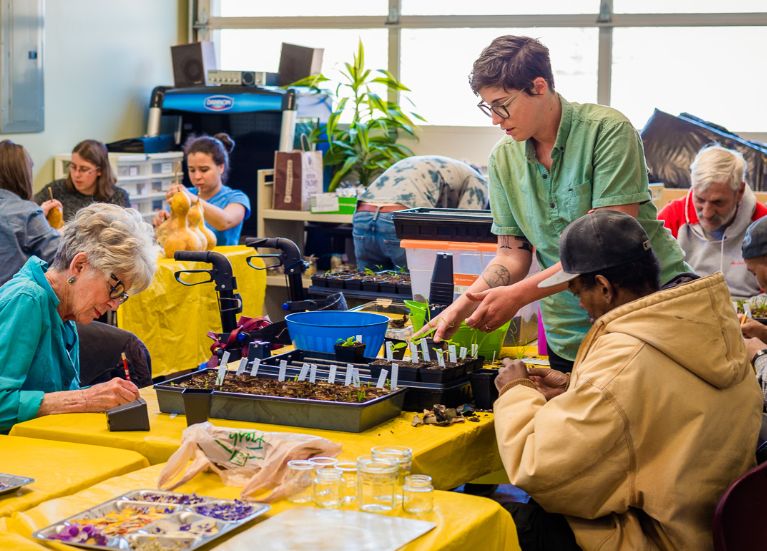
Earning your MSW can prepare you to support individuals, families and communities across health care, education, behavioral health, nonprofit leadership and social services settings.
Graduates of the MSW program develop skills in advocacy, trauma-informed practice, mental health assessment, community engagement and evidence-based intervention.
As a Graduate School of Social Work student, you will be prepared to pursue roles in traditional and nontraditional social work settings and address systemic inequities at the micro, mezzo and macro levels. Potential career paths include behavioral health clinician, health care social worker, school social worker, policy analyst and mental health counselor.
Social Work Career Outlook
Employment for social workers is projected to grow through 2034, with particularly strong demand in health care, mental health and school-based settings.2 According to the U.S. Bureau of Labor Statistics, employment for mental health and substance abuse social workers is projected to grow faster than the average for all occupations as demand for behavioral health services continues to increase.3
| Career Path | Common Work Setting | Median Annual Salary |
|---|---|---|
Health care social worker | Hospitals and health care systems | $68,0904 |
Mental health and substance abuse social worker | Community mental health agencies and outpatient centers | $60,0605 |
Child, family and school social worker | K–12 schools and family services agencies | $58,5706 |
Substance abuse, behavioral disorder and mental health counselor | Outpatient treatment centers and behavioral health organizations | $59,1907 |
Social and community service manager | Nonprofit organizations, government agencies and community service programs | $78,2408 |
MSW graduates may also pursue careers in psychotherapy, behavioral health leadership, healthcare administration, nonprofit management, advocacy, policy, community development and corporate social responsibility, depending on their experience, licensure and professional interests.
Many social work careers require state licensure. Students should review their state’s licensure requirements for education, supervised experience and examinations before enrolling. Learn more about becoming a licensed clinical social worker in Colorado or review your state’s licensure requirements.

What Students Are Saying About the MSW Program
“It’s not so easy to relocate to another city or state. Sure, it would have been a great experience to do so, but an online program afforded me the ability to work closely with my community as I begin the journey towards developing my practice as a helping professional.”
—Sabrina M., MSW program alum
Why Earn Your MSW Online
An online MSW program is ideal for students who want to earn an advanced degree and serve their community without relocating. The flexible online format allows you to balance your personal and professional commitments while pursuing a master’s degree from the University of Denver’s Graduate School of Social Work.
Learn in a Live, Collaborative Online Classroom

As a student of the MSW program, you will attend live online classes, complete coursework and grow your personal relationships through our online campus. You can easily connect with your network of classmates, professors and support services while you complete coursework on your computer, tablet or smartphone using our convenient mobile app.
Serve Your Community Without Relocating

In-person, hands-on experience is a key aspect of your social work education. During your internships, you will make a difference in your community while building your skill set and receiving mentorship from experienced professionals. GSSW facilitates internships in traditional and nontraditional settings, supporting the individual goals of students in our community.
Build Your Professional Network Online

Through live classes, group discussions and access to online student support, students in the MSW program can connect with classmates, faculty and advisors throughout the program. These relationships help students build a professional network while completing coursework from their own communities.
Student Support
As a student in the online MSW program, you will be supported from admission through graduation and beyond. You also join a learning environment dedicated to student success and growth.
Admission:
Your Enrollment Specialist will introduce you to the program, guide you through the application process and connect you with resources such as online information sessions and application workshops.
Enrollment:
Throughout the program you will work with a Student Success Advisor who will provide assistance as you enroll in the program, attend orientation and register for classes.
Classes and Technology:

Your academic advisor will help you track your progress throughout the program and ensure it is meeting your goals. Tech support is available 24/7 to assist with technical problems that may arise.
Field Internships:

Your field placement specialist will work with you to find an internship site near your community that helps refine your skills and meet curricular milestones.
Career:

You will work with the Career Development Office to prepare for the social work job market. Support includes mock interviews, resume refinement and cover letter feedback.
Graduation and Beyond:

You will be invited to the University of Denver’s on-campus Commencement ceremony where you will officially join our alumni network of 8,000 social change-makers worldwide.
Take the Next Step
Discover how you can create positive change as a social worker.
Learn From Renowned Faculty
As a student, you will learn from educators, researchers, policy experts and practitioners who are advancing research in areas such as trauma-informed care, Indigenous community partnerships, homelessness, mental health and youth intervention.
Assistant Professor
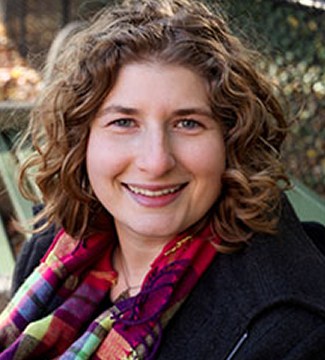
Assistant Professor Emily Saltzman focuses on trauma-informed social work practice, youth mental health and interventions that support children and families impacted by adversity. Her research and clinical experience help students connect evidence-based practice with compassionate, community-centered care.
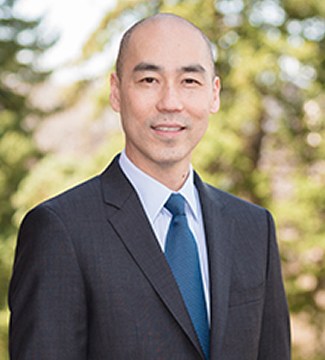
Professor
Professor Johnny Kim focuses on youth and family mental health, school social work and solution-focused therapeutic interventions. His research examines evidence-based approaches that support positive outcomes for adolescents and families in community and school settings. Through his scholarship and clinical expertise, he helps students integrate research-informed practice with strengths-based, solution-focused care.
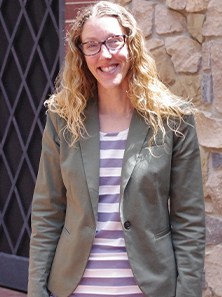
Adjunct
Lisa Ingarfield specialises in research and evaluation focused on sexual violence response, public policy and survivor services. Drawing on extensive experience in the anti-violence movement, her work examines how research, policy and systems change can better address the needs of survivors.
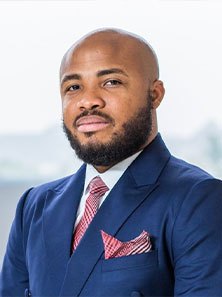
Adjunct
Sam Chijioke Nnorom specialises in applied statistics, research methods and programme evaluation across social work, public health and education. His work connects academic research with real-world practice, helping students develop skills in data analysis, evidence-based practice and data-informed decision-making.
Start Your Online MSW Journey
Have you witnessed the impact of inequity, trauma or systemic barriers on individuals, families and communities? Are you ready to develop the skills to advocate for meaningful social change? Request information to get started.
Licensure Preparation
This CSWE-accredited program is designed to prepare students to seek social work licensure in many states. Because licensure requirements vary by state, students should review their state board’s requirements for education, supervised experience and examinations before enrolling.
Students who plan to pursue clinical licensure, including Licensed Clinical Social Worker (LCSW) pathways, should verify requirements in the state where they intend to practice.
Frequently Asked Questions About Denver’s Online MSW
-
We offer two pathways: the Online MSW and the Online Advanced-Standing MSW. The traditional Online MSW is designed for students with a bachelor’s degree in a subject other than social work (no BSW required). The Advanced-Standing track is specifically for students who already hold a CSWE-accredited Bachelor of Social Work (BSW) degree.
-
Full-time students can complete the traditional Online MSW in 27 months (or 21 months on the accelerated track), while the Advanced-Standing MSW takes 18 months (or 12 months accelerated). For working professionals or parents needing a more adaptable timeline, we also offer a dedicated part-time track completed over 3 years (9 to 12 quarters).
-
No. The University of Denver Online MSW program charges a flat tuition rate per credit hour regardless of your geographic residency status. Out-of-state students pay the exact same tuition rate as Colorado residents, making it a seamless and predictable financial option for students nationwide.
-
DU provides institutional merit scholarships to a significant portion of incoming graduate students. If your initial financial aid package does not fully meet your needs, we feature a formal financial aid appeals process for scholarship re-evaluation. Additionally, DU proudly participates in the Yellow Ribbon Program, which helps eligible veterans cover tuition expenses that exceed the standard Post-9/11 GI Bill cap.
-
This question stems from a technical regulatory update by the U.S. Department of Education regarding federal student loan classifications, not the actual clinical status or professional standing of social workers. For federal lending limits, graduate programs like the MSW have been categorized into a “non-professional” loan bracket, capping federal Direct Unsubsidized Loans at $20,500 annually. Despite this federal lending label, the MSW remains an elite, highly regulated professional graduate degree requiring extensive academic training, clinical fieldwork, and state board licensure.
-
The traditional Online MSW requires 81 credits and 900 hours of supervised fieldwork. The Online Advanced-Standing MSW requires 54 credits and 500 hours of fieldwork. Students complete coursework online while gaining hands-on experience through supervised internships in or near their local communities.
-
The online curriculum balances live, synchronous Zoom seminars with self-paced, asynchronous coursework. Each week, you will log into live, seminar-style sessions to collaborate with professors and peers in real-time, while completing independent modules, reading assignments, and discussion boards on your own schedule between classes.
-
The University of Denver utilizes an integrated practice framework covering both clinical (micro) and systemic (macro) social work. Foundational coursework prepares you for the entire continuum of the field—from direct therapeutic interventions to policy advocacy. During the second half of the program, you complete an Advanced Social Work Practice concentration that can be customized with optional pathways like Mental Health and Trauma or Health, Equity and Wellness to tilt coursework toward your preferred career track.
-
Yes. Online MSW students have full access to customize their education with DU’s renowned certificate programs, including the highly sought-after Animal-Assisted Social Work (AASW) certificate. These tracks allow you to blend specialized elective coursework with your local field placement to build niche expertise in your chosen sub-field.
-
Our placement team works with students across the United States to identify school-approved field placements directly within or near their home communities. You will work with a dedicated field placement specialist to secure an approved site and receive clinical supervision from a licensed social work professional during your internship experience.
-
Yes, DU offers a formal Place of Employment (POE) internship process, which requires a detailed proposal proving your internship tasks are demonstrably different from your regular daily job duties and are overseen by a separate MSW supervisor. However, because most agencies operate during standard business hours, evening and weekend placement opportunities are very limited. Students must maintain daytime availability to complete their field hours when qualified MSW supervisors are on-site.
-
To prepare students seamlessly for real-world clinical environments, DU offers a specialized Virtual Field Experience (VFX) track. This option allows students to begin their initial field placement requirements online, utilizing live Zoom simulations with trained actors and faculty to master core clinical interventions before transitioning to physical, in-person community agencies.
-
Yes. The MSW program is fully accredited by the Council on Social Work Education (CSWE), confirming that the curriculum meets rigorous national standards. Our program is designed to support preparation for social work licensure pathways (such as the LCSW) in many states. Because licensure requirements vary geographically, students should review their specific state board requirements before enrolling.
-
Yes. DU’s online MSW is designed to prepare graduates for professional social work practice and licensure eligibility, where applicable, through a curriculum that aligns with the university’s academic standards and includes required field education experiences. Graduates earn a Master of Social Work degree from the University of Denver.
-
An MSW can be a worthwhile investment for students pursuing careers in clinical practice, healthcare, schools, government agencies and community organisations. While job opportunities vary by location, experience and area of practice, the U.S. Bureau of Labor Statistics projects faster-than-average employment growth for social workers over the coming decade. An MSW also prepares graduates to pursue clinical licensure, where applicable, which may open the door to a broader range of roles and higher earning potential. Additionally, graduates employed by qualifying public service organisations may be eligible for the federal Public Service Loan Forgiveness (PSLF) program to help manage student debt.
University of Denver partners with 2U to support the delivery of these online programs. University of Denver has full control over the programs, including all core academic functions. Click here to learn more about 2U’s roles and responsibilities.
- Best Social Work Schools. (2025). U.S. News & World Report. Retrieved May 2026. ↩︎
- Social Workers. (2025). U.S. Bureau of Labor Statistics Occupational Outlook Handbook. Retrieved May 2026. ↩︎
- Social Workers. (2025). U.S. Bureau of Labor Statistics Occupational Outlook Handbook. Retrieved May 2026. ↩︎
- Social Workers Pay. (2025). U.S. Bureau of Labor Statistics Occupational Outlook Handbook. Retrieved May 2026. ↩︎
- Social Workers. (2025). U.S. Bureau of Labor Statistics Occupational Outlook Handbook. Retrieved May 2026. ↩︎
- Social Workers. (2025). U.S. Bureau of Labor Statistics Occupational Outlook Handbook. Retrieved May 2026. ↩︎
- Substance Abuse, Behavioral Disorder, and Mental Health Counselors. (2025). U.S. Bureau of Labor Statistics Occupational Outlook Handbook. Retrieved May 2026. ↩︎
- Social and Community Services Manager. (2025). U.S. Bureau of Labor Statistics Occupational Outlook Handbook. Retrieved May 2026. ↩︎